1. The Mechanical Anatomy of Folded Periscope Optics
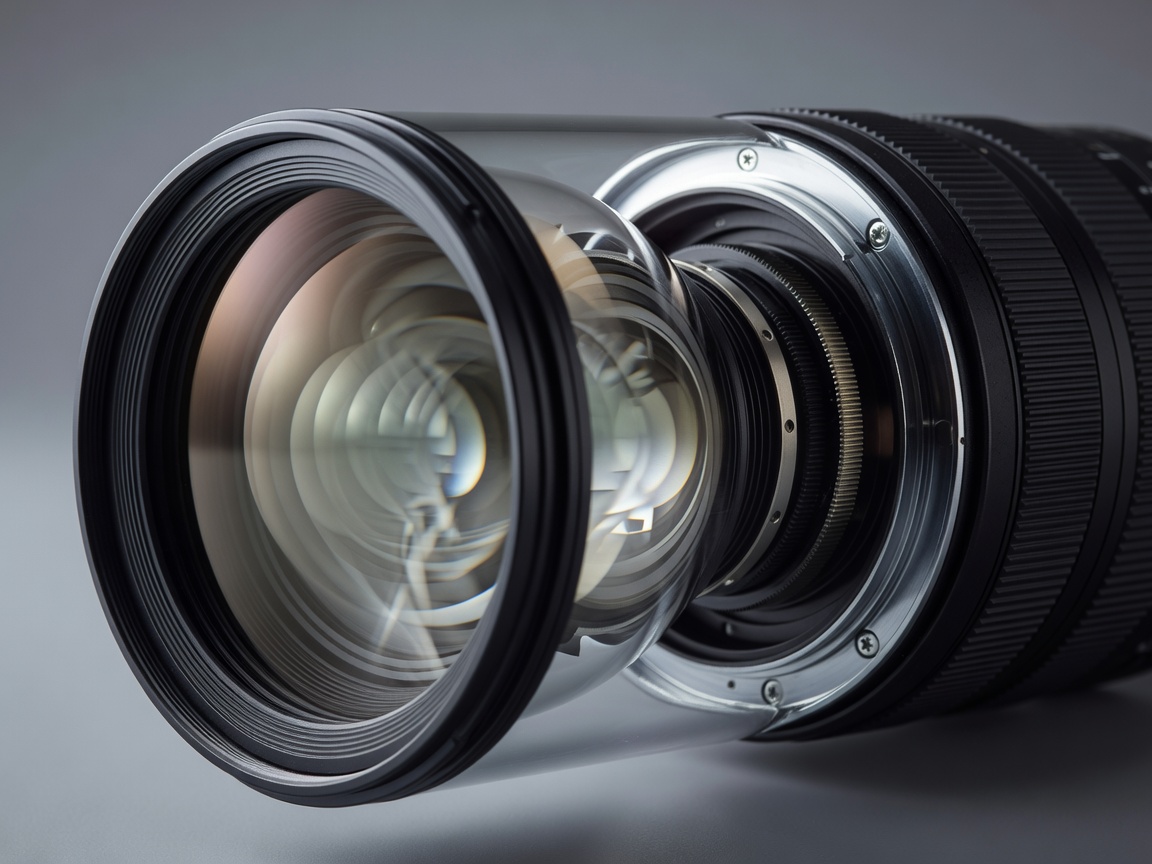
Conventional prime smartphone lenses suffer from optical compression limits: to achieve higher optical magnification without physical barrel length, manufacturers must resort to smaller silicon sensors or extreme digital cropping. Folded periscope optics bypass this limitation entirely. In flagship devices such as the Samsung Galaxy S26 Ultra and Xiaomi 15 Ultra, light enters through the external sapphire window, reflects off a high-transmittance mirror or prism, and travels across multi-element floating lens groupings.
This horizontal light path allows manufacturers to install substantially larger image sensors behind the telephoto lens. While early telephoto units made use of minuscule 1/4.0-inch sensors that struggled in anything other than midday sunlight, contemporary 2026 telephoto sensors measure up to 1/1.4-inch (as observed in the Honor Magic7 Pro's 200MP periscope module).
2. High-Resolution Sensors vs. Pure Optical Length
A prominent architectural divide has emerged between pure optical focal length and ultra-high-resolution sensor-crop periscopes:
- Extreme Resolution Sensor Crop (Xiaomi 15 Ultra & Vivo X200 Pro): Utilizing 200MP sensors (like the Samsung ISOCELL HP9 or customized ZEISS APO modules) paired with moderate native optical zoom (typically 3.7x to 4.3x). Because the sensor packs 200 million physical pixels, the system can execute a lossless 2x in-sensor binning crop to deliver pristine 8.6x zoom without relying on algorithmic interpolation.
- Dual Dedicated Telephoto Setup (Samsung Galaxy S26 Ultra & OPPO Find X8 Ultra): Retaining two distinct physical telephoto modules—a 3x intermediate portrait lens (approx. 70mm) and a secondary 5x or 6x periscope lens (120mm–135mm). This prevents the dreaded "dead zoom zone" between 1.1x and 4.9x where single-periscope smartphones must digitally upscale their main camera feed.
- True Continuous Optical Zoom (Sony Xperia 1 VII): Employing moving micro-stepper motors inside the module to continuously adjust physical focal length from 85mm through 170mm without stepping across digital thresholds.
3. Floating Elements and Telephoto Macro Capabilities
Historically, periscope telephoto cameras suffered from long minimum focusing distances, frequently exceeding 80cm to 1 meter. This rendered them useless for close-up subjects or macro photography. Recent innovations introduce floating element groupings that shift independently along a dual-rail guide.
By moving the internal focusing group closer to the sensor, phones like the Vivo X200 Pro and Huawei Pura 80 Ultra achieve a telephoto macro focusing distance as close as 15cm. This produces true optical shallow depth-of-field, dramatic subject separation, and zero perspective distortion often associated with ultra-wide macro modes.
Advantages of Modern Periscopes
- True optical compression that flatters facial portrait features.
- Exceptional distant architectural and wildlife detail capture.
- Superior optical macro photography without wide-angle perspective distortion.
- Hardware-stabilized prism shift providing rock-solid long-range hand-held framing.
Physical Constraints & Trade-offs
- Narrower physical apertures (typically f/2.5 to f/3.4) capturing less light than main cameras.
- Increased rear camera bump thickness and chassis weight.
- Substantial battery drain during continuous multi-frame stabilization.
- Lower optical resolution when forced into digital cropping beyond 30x.
4. Low-Light Telephoto Performance & Optical Stabilization
The most difficult challenge in long-focal-length photography is camera shake: any micromovement is magnified proportionally by the zoom factor. At 5x or 10x magnification, normal human hand tremor results in severe motion blur unless the shutter speed is pushed to 1/250s or faster—a severe penalty in dim light.
To counteract this, modern flagships employ dual-axis prism optical image stabilization (OIS) combined with sensor-shift assemblies. High-frequency gyroscope sensors poll at 10,000Hz to actuate voice coil motors that tilt the prism in opposing directions, enabling sharp hand-held captures at shutter speeds as slow as 1/15s in low-light twilight environments.
5. Conclusion & Buying Recommendations
When choosing a smartphone primarily for zoom reach, prioritize sensor size and prism stabilization over exaggerated marketing numbers like "120x Super Zoom." The sweet spot for versatile everyday shooting is a dual telephoto arrangement or a large 1/1.4-inch 200MP periscope with a native focal length around 85mm to 100mm.