1. The Significance of the 1-Inch Format (13.2mm × 8.8mm)
In photography terminology, a "1-inch type" sensor does not literally measure 1 inch across its diagonal; the designation is a historical holdover from early video camera vacuum tubes. A 1-inch smartphone sensor features a true diagonal of approximately 15.86mm with an active light-sensitive surface area exceeding 116 square millimeters.
Compared to typical midrange smartphone sensors (measuring around 1/2.0-inch with roughly 30 square millimeters of area), a 1-inch sensor captures roughly four times more native photons at any given shutter speed.
This massive photon collection creates true optical shallow depth of field: when photographing flowers, food, or close-up human subjects, the background melts into creamy, organic optical blur with zero reliance on artificial software segmentation filters.
2. Retractable Lens Barrels: Solving the Thickness Paradox
Placing a large 1-inch sensor behind a fast f/1.6 optical lens creates a severe geometric dilemma: the back focal distance required to project an undistorted image circle across that massive sensor would require a camera bump extending 12mm to 15mm beyond the phone's back cover.
To preserve pocketability, manufacturers like Huawei (with the Pura 80 Ultra) developed motorized retractable lens barrels. When the camera application is launched, a precision micro-gear mechanism physically extends the outer lens element 2.5mm outward from the chassis with a distinctive mechanical whir.
When the camera application is closed or if the device detects a sudden drop via internal accelerometer sensors, the mechanism retracts into the body within 150 milliseconds to shield the precision glass from impact shock.
3. Mechanical Variable Aperture: Controlling Depth and Sharpness
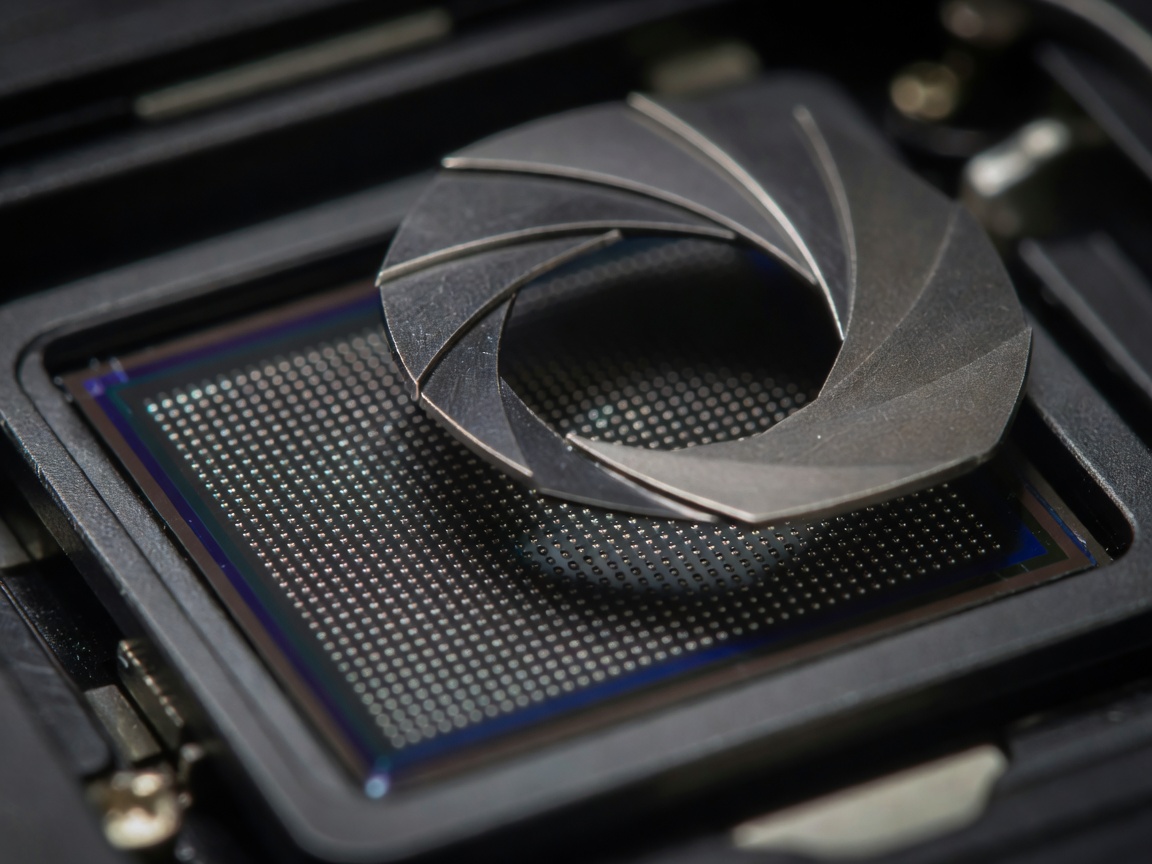
Large 1-inch sensors introduced a new optical challenge: their native depth of field is so shallow at f/1.6 that group photos or flat document scans suffer from soft, out-of-focus edges and blurred faces in secondary rows.
To rectify this, leading manufacturers introduced true mechanical variable apertures:
- Huawei & Xiaomi Stepless Apertures: Multi-blade iris mechanisms that step continuously from f/1.4 or f/1.6 down to f/4.0.
- Optical Edge Sharpness at f/2.8 – f/4.0: Stopping down to f/4.0 broadens the focus plane significantly, ensuring that every person in a multi-row group photo remains pin-sharp from ear to ear.
- Sunstar Starburst Diffraction: Stopping down to f/4.0 against point light sources (like streetlamps or festive lights) creates stunning natural 10-point or 12-point diffraction starbursts, a classic creative optical effect impossible to generate with fixed aperture lenses.
Advantages of Large Sensors & Variable Iris
- Authentic optical depth-of-field without artificial cutout halo artifacts.
- Exceptional native dynamic range preserving highlights and deep shadow detail.
- Flexibility to control physical depth of field for macro, landscape, or group portraits.
- High-transmission 1G+7P (one glass element, seven plastic elements) suppressing chromatic aberration.
Engineering Constraints
- Substantial physical weight and pronounced rear camera island modules.
- Higher mechanical complexity with moving parts vulnerable to severe impact damage.
- Substantially higher production cost reflected in flagship tier pricing.
4. The Future of Mobile Optical Glass
As silicon sensors reach practical physical dimensions bounded by smartphone pocketability, innovation is shifting toward advanced glass materials. The integration of molded glass aspherical elements, fluorite low-dispersion coatings, and freeform prism surfaces ensures that corner-to-corner sharpness remains uniform without purple chromatic fringing along high-contrast edges.